
Mold on the Bathroom Ceiling: Steam, Fan or Roof Leak?
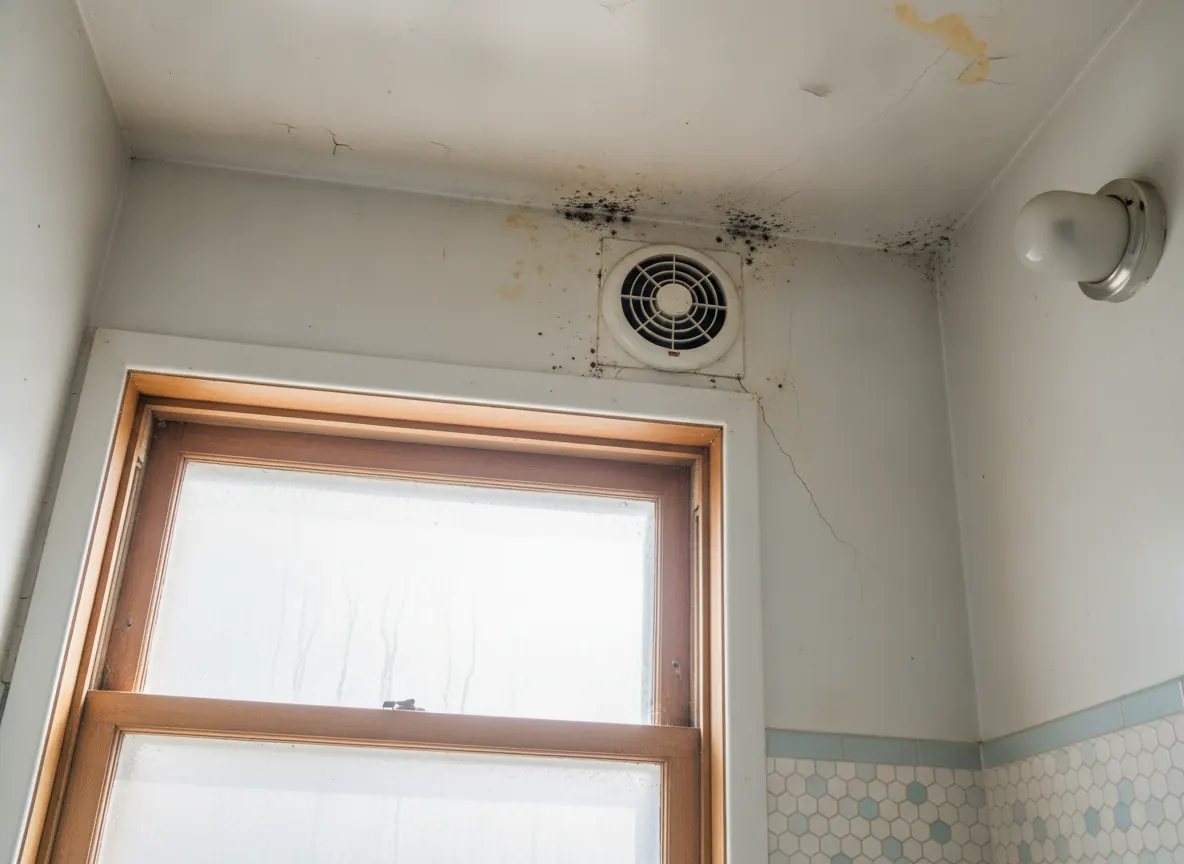
Black or gray specks over the shower. A fuzzy patch in the corner. A brown ring that keeps coming back. Bathroom ceiling mold is one of the most common mold questions, and the fix depends almost entirely on where the water is coming from. In Durham, NC homes, the usual suspects are shower steam, a weak or misrouted exhaust fan, a roof leak, or a pipe above the ceiling.
The short version. Small spots spread across the ceiling over the tub usually mean steam and not enough ventilation. A stain ring, sagging drywall or mold that tracks along one line usually means a leak from above. Fix the moisture first. Then clean small surface spots, and get a quote when the drywall is soft, stained through or the patch keeps growing.
Is it steam, the fan or a leak?
| What you see | Likely cause | What to check |
|---|---|---|
| Small dark specks over the tub or shower, spread out | Steam and condensation | Is there a fan, and do you run it? |
| Spots worse in corners and along the outside wall | Cool surface plus humid air | Insulation above that corner, fan airflow |
| Mold around the fan grille itself | Fan too weak, dirty or not venting outdoors | Where the fan duct ends in the attic |
| Brown ring or stain with mold inside it | Leak from above | Roof, flashing, a bathroom or pipe upstairs |
| Soft, sagging or bubbling drywall | Ongoing leak; material is wet through | Stop the water, then get it opened up |
Steam and condensation
A hot shower puts a lot of water into a small room. When that warm, wet air hits a cooler ceiling, it condenses. If the room does not dry out between showers, mold grows on the paint film and in the drywall paper. NCDHHS guidance says mold needs moisture, and that if relative humidity "stays above 70 percent indoors for extended periods of time, mold will almost certainly grow." EPA advises keeping indoor humidity below 60%, ideally 30–50%.
Summer makes this harder. Raleigh-Durham summer dew points average in the mid-60s (NOAA 1991–2020, RDU), so opening a window in July may bring in as much moisture as it lets out. A working exhaust fan is the more reliable tool.
The exhaust fan
Many bathroom ceiling problems come down to the fan. Check three things:
- Does it move air? Hold a square of toilet paper to the grille with the fan on. If it does not pull the paper flat, the fan is weak, clogged or the duct is blocked.
- Where does it go? The duct should end outdoors through the roof or a wall, not in the attic. A fan that blows into the attic moves the moisture problem to the roof decking. See attic mold.
- Do you run it long enough? Run it during the shower and for a while after. A timer switch helps.
Replacing a fan with the same type is often simple. If the job means new wiring or a new circuit, North Carolina permit rules may apply: G.S. 160D-1110(c) exempts much single-family work of $40,000 or less, but not work that adds, replaces or changes electrical wiring. Check with Durham City-County Inspections or a licensed electrician.
Roof and plumbing leaks
A leak looks different from steam. It tends to make a ring, a line or a single heavy patch, often away from the shower. The drywall may feel soft or look stained through the paint. Common sources:
- Roof flashing around the fan vent or plumbing vent stack.
- A toilet, tub or shower drain in a bathroom upstairs.
- A supply line or fitting in the ceiling.
- Condensation on an uninsulated duct or pipe in the attic above.
Leaks often show up after heavy rain. Raleigh-Durham averages about 46 inches of rain a year, with July and September the wettest months (NOAA). EPA advises drying water-damaged materials "within 24-48 hours to prevent mold growth." If the ceiling got wet and stayed wet, plan on more than surface cleaning. See mold after water damage.
Can you clean it yourself?
Small surface spots from steam, on painted drywall that is still firm, are often a cleaning job once the ventilation is fixed. Wear gloves and eye protection, keep the room ventilated, and do not mix cleaning products. If spots return within weeks, the moisture problem is not solved yet.
Get a professional look when:
- The drywall is soft, sagging or stained through.
- The patch is larger than a few hand-widths or keeps spreading.
- There is a musty smell from the ceiling or attic.
- You suspect a leak you cannot find.
- Anyone in the home has asthma or mold allergies. The CDC says "people with asthma or who are allergic to mold may have severe reactions."
- The house is older. Ceiling textures and other older materials may contain asbestos, so ask whether testing is needed before anyone cuts drywall. The NC Health Hazards Control Unit is at 919-707-5950.
Renting? Start with a written request
If you rent, tell your landlord in writing and keep a copy. North Carolina law requires landlords to keep rentals fit and habitable (G.S. 42-42), and its list of imminently dangerous conditions includes "unsafe ceilings or roofs" and plumbing leaks that contribute to mold. Tenants cannot withhold rent on their own without a court ruling (G.S. 42-44(c)). Our rental mold guide has the steps. This is not legal advice.
What bathroom mold remediation costs
Published national estimates, not quotes: bathroom mold remediation runs $500–$1,500 (Fixr, Aug 2025) or $500–$1,000 (This Old House, Mar 2026). That usually excludes fixing the roof, plumbing or fan, and repainting. See the Durham mold remediation cost page for the full table and a calculator. Quotes come from independent companies, not this site.
When you collect quotes, ask each company the same questions: who finds and fixes the moisture source, how the area will be contained, what gets removed versus cleaned, and who checks the result. Our NC mold company checklist covers the rest, and mold removal and remediation explains what a full job involves.
Frequently asked questions
Why does mold keep coming back on my bathroom ceiling?
Usually because the moisture is still there. If the exhaust fan is weak, vents into the attic, or is not run long enough, steam keeps wetting the ceiling. A slow leak from above does the same. Fix the source, then clean or replace the affected drywall.
Can I paint over mold on a bathroom ceiling?
Painting over mold hides it but does not fix it. Clean small surface spots and fix the ventilation first. If the drywall is soft or stained through, the affected section usually needs to be removed and replaced. Mold-resistant paint helps only after the moisture problem is solved.
How can I tell a roof leak from condensation on a bathroom ceiling?
Condensation tends to leave small specks spread over the shower area. A leak usually makes a ring, a line or one heavy stain, sometimes with soft or sagging drywall, and often shows up after rain. Check the attic above the stain for wet insulation or decking.
How much does bathroom ceiling mold removal cost?
Published national estimates put bathroom mold remediation at $500–$1,500 (Fixr, Aug 2025) or $500–$1,000 (This Old House, Mar 2026). Fixing a leak, replacing a fan and repainting are often extra. Independent companies set their own prices after seeing the job.
Durham NC Mold Remediation is a free quote service, not a mold company. You describe the problem once, and independent mold inspection and remediation companies serving Durham, NC and the Triangle may reply with quotes. Companies may pay to receive requests or calls, and they reply on their own schedules. Request free quotes or call (919) 386-4072.