
Does Homeowners Insurance Cover Mold in North Carolina?
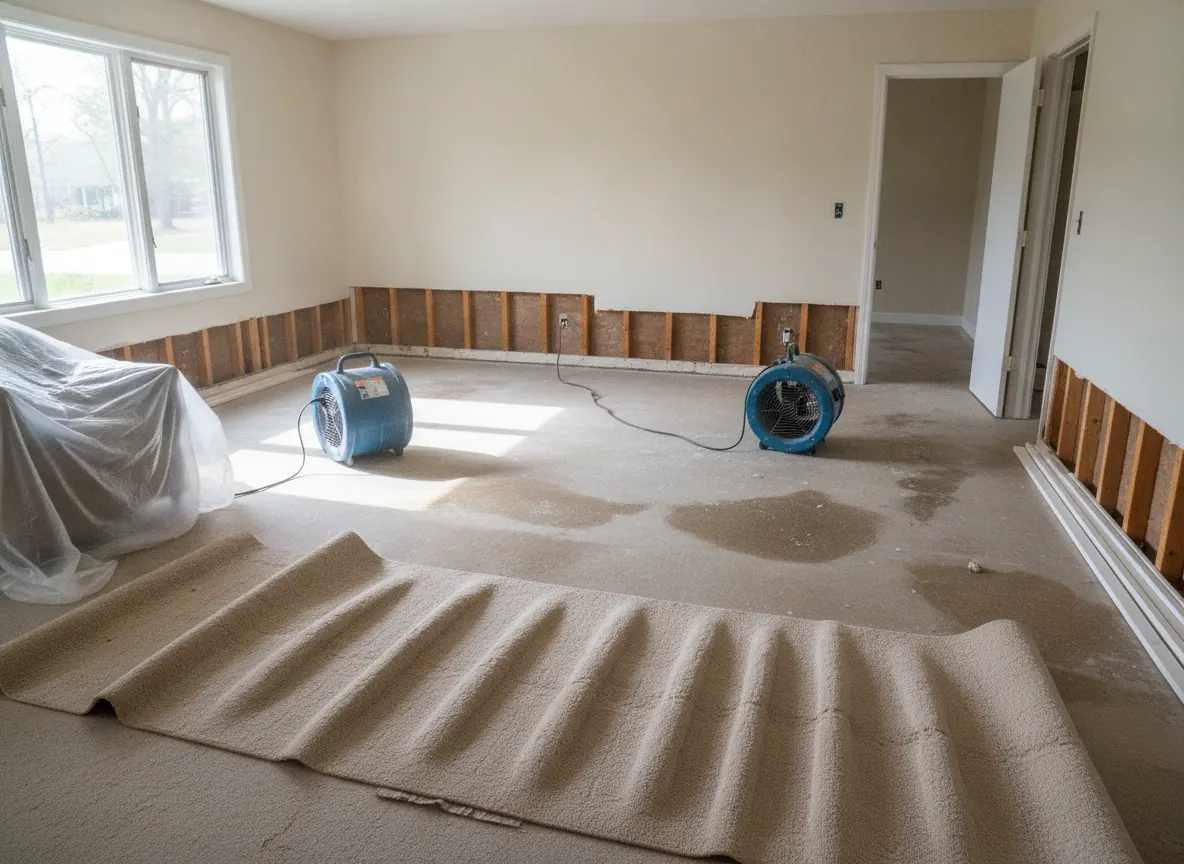
If you found mold in a home in Durham, NC, one of the first calls is often to the insurance company. The answer you get will depend on your policy, what caused the mold, and how quickly the water was dealt with. No website, and no mold company, can promise you coverage. What follows is what the state's own sources show and how to read your policy.
The short version. North Carolina homeowners forms include a mold and fungus endorsement with limits, in place since 2002. Flood is excluded from homeowners policies and needs a separate flood policy, which usually has a 30-day wait. Whether mold is covered usually depends on the cause, such as a sudden pipe burst versus a slow leak. Check your declarations page or call NCDOI Consumer Services at 855-408-1212.
What North Carolina sources say
The North Carolina Department of Insurance (NCDOI) does not have a page about mold. Its homeowners pages do not mention mold or fungus at all. The clearest state-level source is the North Carolina Rate Bureau, which issues circular letters on homeowners policy forms.
In February 2002, the Rate Bureau announced a new mandatory endorsement, HO 32 33. It said the endorsement was "designed to provide and more specifically describe the intended mold and fungus coverage for the benefit of policyholders and to help companies better manage coverage for mold and fungus subject to certain limits." The same notice said it "also removes the peril of 'seepage and leakage' as a covered peril under the HO-3 policy form," for policies written on or after May 1, 2002.
Two takeaways. Mold coverage, where it exists, has limits. And long-term seepage and leakage is treated differently from sudden water damage. The current dollar limits were not found in this research, so do not rely on any figure you see quoted online. Your declarations page and endorsements are what count.
Why the cause of the water matters
Insurers look at what caused the mold, not just the mold. These are common scenarios and how they often play out. Your policy may differ.
| Cause | How it often goes |
|---|---|
| Sudden pipe burst or appliance hose failure | The water damage may be covered, and mold from it may be covered up to the endorsement's limits |
| Slow leak under a sink or behind a shower over months | Often treated as seepage or leakage, which the 2002 change removed as a covered peril on HO-3 forms |
| Flood or rising water from a storm | Excluded from homeowners policies; a separate flood policy is needed |
| Humid crawl space or attic condensation | Often seen as maintenance rather than a sudden loss |
| Roof leak after a storm | Depends on the policy, the damage and how fast it was repaired |
Flood, Tropical Storm Chantal and the 30-day wait
NCDOI is direct about flooding: "Homeowners policies do not cover flood or rising water damage." Flood coverage comes from a separate policy, often through the National Flood Insurance Program. NCDOI notes NFIP coverage "involves a 30-day waiting period before the policy becomes effective; however, there are exceptions," and warns, "Just because your home is not in a designated flood plain, do not assume you will never incur flood damage."
Tropical Storm Chantal on July 6–7, 2025 showed why. The National Hurricane Center reported totals of more than 10 inches near Chapel Hill and north of Hillsborough, and about 80 people rescued in Durham County when the Eno River overflowed. The federal disaster declaration for Durham and Orange counties (DR-4889) covered Public Assistance only, not federal Individual Assistance for households, according to FEMA data. If you live near the Eno, Ellerbe Creek or Third Fork Creek, check your address at msc.fema.gov and ask your agent about flood coverage before the next storm.
If you rent
A renters policy generally covers your belongings, not the building. NCDOI's renters page lists covered perils that include "Accidental discharge or overflow of water or steam from within a plumbing, heating, air conditioning or automatic fire protective sprinkler system, or from within a household appliance." Mold limits may still apply. Repairs to the unit are usually the landlord's job under G.S. 42-42, and requests should be in writing. This is not legal advice. See the rental mold page.
What to do if you find mold after a leak
Stop the water
Shut off the supply or get the roof or plumbing leak fixed.
Document it
Take photos and video of the leak, the damage and the mold before cleanup.
Dry quickly
EPA advises drying water-damaged areas within 24–48 hours to prevent mold growth.
Read your policy
Check the declarations page and any mold or fungus endorsement for limits.
Call your agent or insurer
NCDOI says a company "should acknowledge receipt of your claim within 30 days."
Get written scopes
Ask companies for a written protocol and price your adjuster can review.
Be wary of any company that says insurance will definitely pay, or that pushes you to sign on the spot. If a company signs you up in your home, North Carolina's off-premises sales law (G.S. 14-401.13) generally allows cancellation until midnight of the third business day on sales of $25 or more; ask whether it applies and for the form. North Carolina does not license mold inspection or remediation companies, so checking credentials is up to you. If you have questions about your claim, NCDOI Consumer Services is at 855-408-1212.
Paying when insurance does not
Many mold jobs end up paid out of pocket, partly or fully. Published national estimates put a typical job at $1,500–$9,000 (Fixr, Aug 2025) or $1,200–$3,750 (This Old House, Mar 2026). The Durham mold remediation cost guide has the full table and a calculator, and mold after water damage covers drying windows and storm cautions. Fixing the moisture source can keep the bill from growing.
Frequently asked questions
Does homeowners insurance cover mold in North Carolina?
Sometimes, within limits. North Carolina homeowners forms have included a mold and fungus endorsement with limits since 2002, and coverage usually depends on the cause, such as a sudden pipe burst versus a slow leak. Flood is excluded. Check your declarations page or call NCDOI Consumer Services at 855-408-1212.
Is there a dollar limit on mold coverage in NC?
The 2002 endorsement describes mold coverage subject to certain limits, but the current dollar limits were not confirmed for this guide. Read your own declarations page and endorsements, or ask your agent.
Does homeowners insurance cover mold in a crawl space?
It depends on the cause. Mold from long-term humidity or condensation is often treated as maintenance, while mold from a sudden, covered water event may be treated differently, within limits. Ask your insurer how your policy reads.
Does flood insurance cover mold after a storm?
Homeowners policies exclude flood, so flood damage is handled by a separate flood policy, often through NFIP. NFIP coverage usually starts after a 30-day wait, with exceptions. Ask your flood insurer how it treats mold that follows a flood.
Durham NC Mold Remediation is a free quote service, not a mold company. You describe the problem once, and independent mold inspection and remediation companies serving Durham, NC and the Triangle may reply with quotes. Companies may pay to receive requests, and they reply on their own schedules. Request free quotes or call (919) 386-4072.