
Mold After Remediation: What Clearance Testing Proves
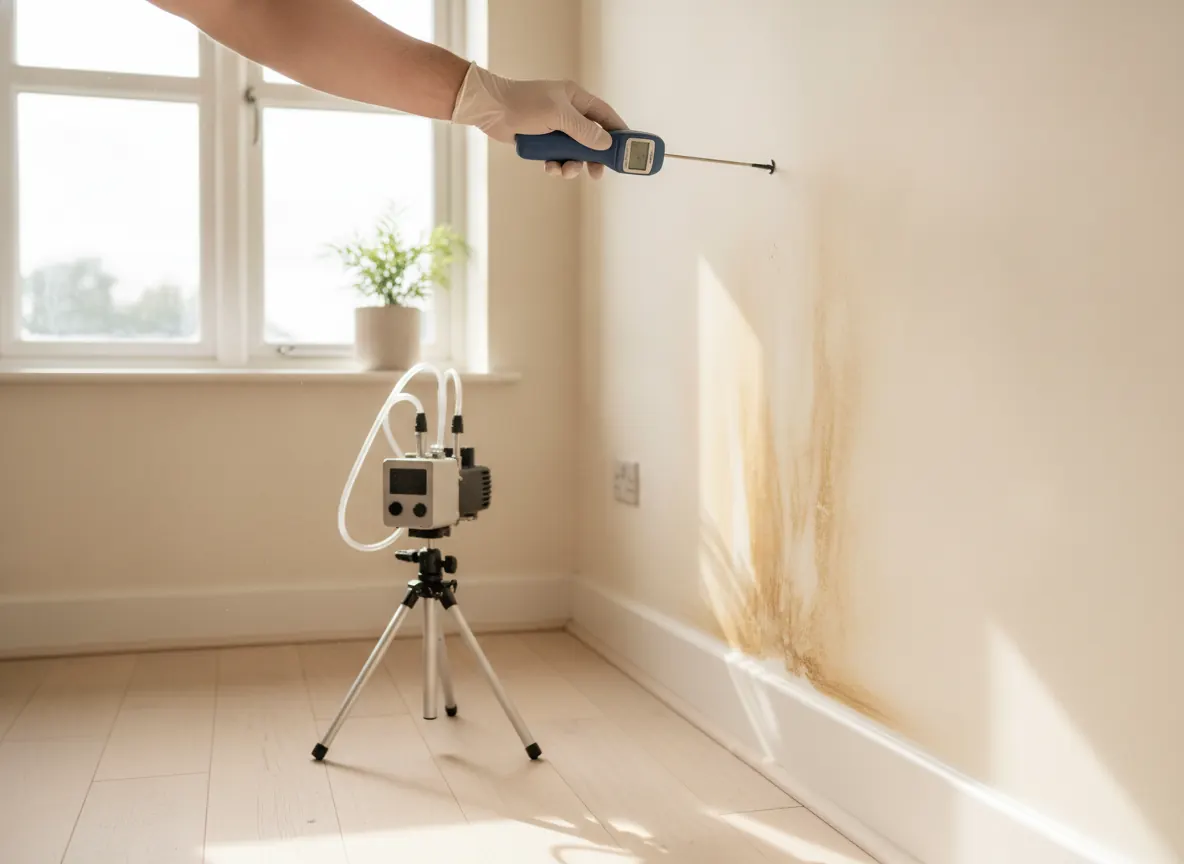
The containment plastic is still up, the air scrubber is humming, and the company says the job is done. How do you know? That is what post remediation verification, often called clearance testing, is for. It is a final check, done before the work area is closed up, that the mold was removed and the area is dry.
This guide explains what a clearance check usually includes, what it proves, what it cannot prove, and how homeowners in Durham, NC can set it up so the result means something.
The short version. Clearance is a snapshot. It can show that visible mold and debris are gone, that materials are dry, and, if sampling is done, that results meet criteria agreed in advance. It cannot promise mold will not come back if the moisture source returns. It means the most when it is done by someone independent of the remediation company.
What is post remediation verification?
Post remediation verification is an inspection of the work area after mold removal and cleaning, and before walls are closed or containment comes down. The goal is to confirm that the remediation did what the written scope said it would. It is not the same as the initial assessment, which finds the problem and its cause.
North Carolina has no mold licensing program, so there is no state clearance form or state-defined pass standard. What counts as passing should be written into your scope before work starts.
What a clearance check usually includes
Visual inspection
The assessor looks inside the containment for remaining growth, staining on framing, dust and debris. NCDHHS guidance calls a thorough visual inspection "the first and most important way to assess water damage and mold growth problems."
Moisture readings
Framing, subfloor and nearby materials are measured to confirm they are dry. If the wood is still wet, mold can return no matter how clean it looks.
Source check
The assessor confirms the leak, drainage or humidity problem was addressed, or notes that it was not.
Sampling, if agreed
Some clearances add air or surface samples, compared against outdoor air or an unaffected room.
Written report
A dated report with photos, readings, any lab results and a pass or fail statement for each area.
What clearance testing proves, and what it does not
| A clearance check can show | It cannot show |
|---|---|
| No visible mold or debris remains in the work area | That there is no mold anywhere else in the house |
| Materials measured dry on that day | That they will stay dry if the leak returns |
| Sample results, if taken, met the agreed comparison | A universal safe number for indoor mold |
| The scope was followed in the areas checked | Anything about areas outside the scope |
The point about numbers matters. NCDHHS guidance says "there are currently no uniformly accepted standards that quantify how much or what kind of airborne mold is acceptable." Sampling results are usually read by comparison, such as inside versus outside, not against a single legal limit.
Is air testing needed for clearance?
Not always. The CDC says it "does not recommend mold testing" for deciding whether to clean up mold you can see, because "no matter what type of mold is present, you need to remove it." Clearance is a different question: checking finished work. Many assessors still use samples at that stage, especially on larger jobs, in homes with sensitive occupants, or when a sale or dispute needs documentation.
For a small, well-defined job, a careful visual inspection plus moisture readings may be enough. Ask the assessor to explain why sampling is or is not worth it for your job. Our mold inspection and testing page covers when testing earns its cost.
Who should do the clearance check?
North Carolina does not require it, but state health guidance advises: "Do not hire a consultant who also provides remediation services" (NCDHHS, 2005). The same logic applies at the end of a job. The company that did the work has a natural interest in passing it. An independent assessor, hired and paid by you, does not.
Practical setup:
- Hire the assessor directly, not through the remediation company.
- Agree on clearance criteria in writing before work begins.
- Ask the remediation company to leave containment up until clearance passes.
- Put in the contract what happens on a failed clearance: who re-cleans, and who pays for the retest.
Since North Carolina does not license mold assessors, check certifications you can look up. Our NC mold company checklist walks through IICRC, ACAC and the other items worth checking.
What happens if clearance fails?
A failed clearance is not a disaster. It usually means more cleaning, more drying or a bit more material removal in one area, followed by a retest. Read the report closely. A fail for leftover dust is a different problem from a fail for wet framing, which points back to the moisture source.
What clearance testing costs
Published national estimates, not quotes: Fixr (Jan 2025) lists mold inspection with testing at $450–$800, averaging about $500, with inspection alone at $300–$600 and air testing at $500–$700. Clearance costs depend on how many areas and samples are involved. See the Durham mold remediation cost page for overall job ranges and a planning calculator. Quotes come from independent companies, not this site.
Why clearance matters in Durham homes
Raleigh-Durham averages about 46 inches of rain a year, with July and September the wettest months and summer dew points in the mid-60s (NOAA 1991–2020, RDU). Crawl spaces and attics can stay damp for long stretches. That makes the moisture-reading part of clearance as important as the visual part. A clean but damp crawl space is a crawl space that may need cleaning again. See crawl space mold for how moisture control fits in.
Keep the report
File the clearance report with the scope, invoices and any repair records. Buyers, insurers and future contractors may ask for it. If you are selling, it is one of the most useful documents you can hand over, alongside proof that the moisture source was fixed.
Frequently asked questions
What is post remediation verification?
It is a final inspection after mold removal and before the area is closed up. An assessor checks for remaining mold and debris, measures moisture, confirms the source was addressed, and may take samples. The result is a written pass or fail report for each work area.
Does a passed clearance test mean mold won't come back?
No. Clearance is a snapshot of the work area on the day it is checked. If the leak, drainage or humidity problem returns, mold can return too. That is why moisture readings and proof of the source fix matter as much as samples.
Who should do clearance testing after mold remediation?
Ideally someone independent of the remediation company, hired and paid by you. North Carolina does not require this, but NCDHHS guidance advises against using a consultant who also does the remediation. Agree on clearance criteria in writing before work starts.
Is there a safe mold spore count for clearance?
There is no single accepted number. NCDHHS guidance says there are no uniformly accepted standards for how much airborne mold is acceptable. Assessors usually compare indoor samples with outdoor air or an unaffected room, using criteria agreed before work begins.
Durham NC Mold Remediation is a free quote service, not a mold company. You describe the problem once, and independent mold inspection and remediation companies serving Durham, NC and the Triangle may reply with quotes. Companies may pay to receive requests or calls, and they reply on their own schedules. Request free quotes or call (919) 386-4072.