
How Mold Remediation Works in Durham, NC
North Carolina has no state mold license and no required steps, so the process depends on the company you hire. Here is what a careful job in Durham, NC typically looks like, from your first request to the records you keep, with the checks worth asking for along the way.
Get a Free Quote Call (919) 386-4072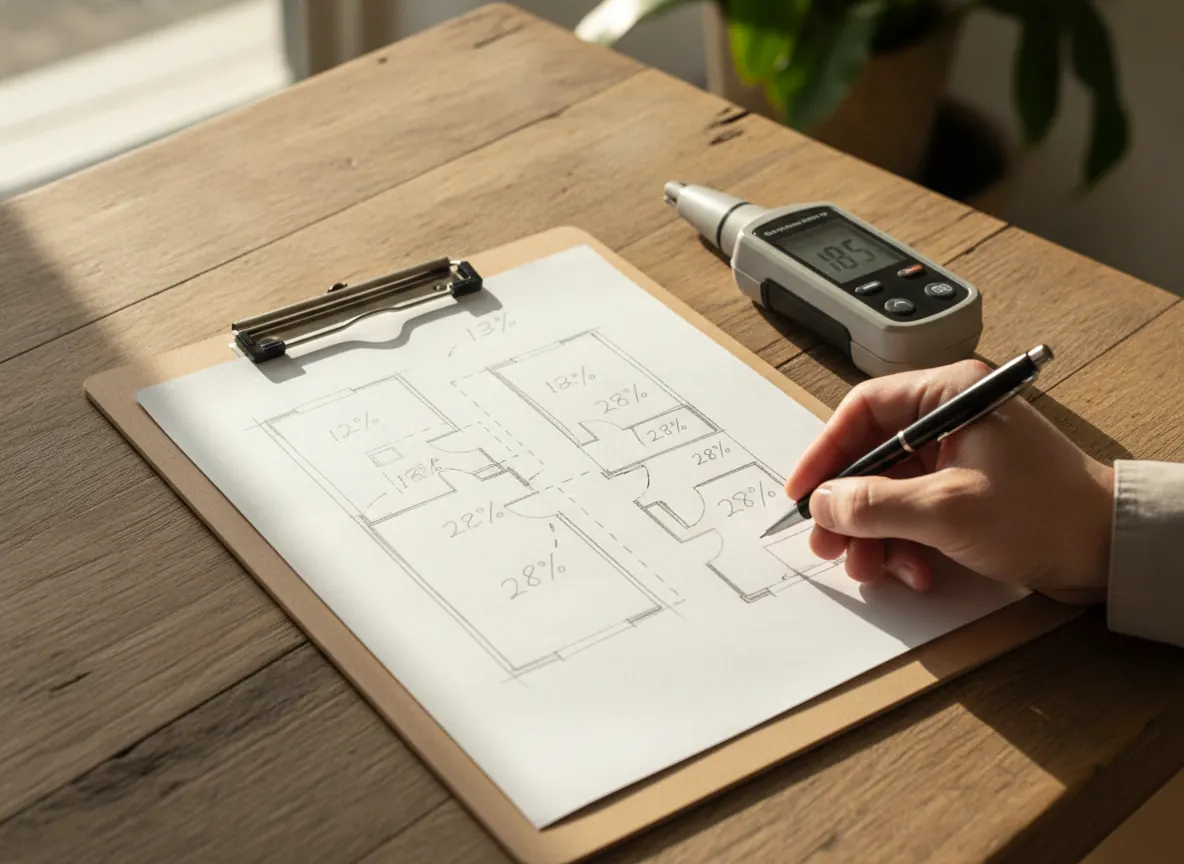
The short version
Find the water. Map the mold. Contain the area. Remove what is moldy and clean what can be cleaned. Dry it and fix the source. Have someone independent check the result before the walls go back up.
Durham NC Mold Remediation is a free quote service and does none of this work. The steps below describe what independent mold companies in Durham, North Carolina and the Triangle typically do, so you can read their quotes with a clear picture of the job.
The CDC says you do not need to know the type of mold, and that no matter what type is present, you need to remove it. That is why the steps start with water and scope, not lab tests.
The steps of a typical mold job in North Carolina
Describe the problem
Use the free quote form or call. Say where the mold is, roughly how big it looks, what got wet and when, whether it is a crawl space, attic or basement, and whether you own or rent. Photos can come later.
Companies reply
Independent mold companies that work in Durham and the Triangle contact you to ask questions and set up a visit. Companies reply on their own schedules, and they may pay to receive requests. You never have to hire any of them.
Get an assessment, ideally independent
Someone inspects the home, finds the moisture source and maps the growth. A thorough visual inspection comes first; NCDHHS warns against contractors who want air sampling as a first step. As best practice, not law, NCDHHS advises not hiring a consultant who also provides remediation services.
Check for asbestos in older homes
If the plan calls for tearing out old drywall, flooring, plaster or pipe insulation, ask whether an accredited asbestos inspection is needed first. Abatement above 35 cubic feet, 160 square feet or 260 linear feet needs a state permit. The NC Health Hazards Control Unit is at 919-707-5950.
Compare written scopes and check credentials
Ask each remediation company for a written protocol and scope, an insurance certificate, IICRC or ACAC certifications you can look up, and written warranty terms. North Carolina does not license mold inspection or remediation companies, so checking credentials is up to you.
Containment, removal and HEPA cleanup
The company you choose seals off the work area with plastic and air filtration, removes moldy porous materials such as drywall and insulation, cleans framing and other hard surfaces, and HEPA-vacuums the area. Details depend on the job and the protocol.
Dry it and fix the moisture source
Fans and dehumidifiers bring materials down to a dry reading. The roof leak, plumbing leak, missing vapor barrier or crawl space humidity problem is fixed, often by a separate trade. Cleaning mold without fixing the water rarely lasts.
Independent clearance before closing up
Before new drywall goes up, an independent assessor checks the work. This post-remediation verification is best practice, not a state requirement, and it lets someone with no stake in the job confirm the area is clean and dry.
Rebuild and keep the records
Rebuild comes last. Single-family work of $40,000 or less needs no building permit under G.S. 160D-1110(c) unless it involves structural, plumbing, HVAC or electrical work; check with Durham City-County Inspections for local rules. Keep the scope, photos, invoices, test results and warranty.
Why a separate assessor?
North Carolina doesn't require it, but state health guidance is direct: "If you hire a consultant to investigate and identify a problem in a building, that should be all the consultant does. Do not hire a consultant who also provides remediation services" (NCDHHS, 2005). The idea is simple: the person who decides how much work is needed, and later says it was done, should not profit from doing it.
That can mean two sets of paperwork and two bills. It also means you can ask any remediation company who will do the clearance check, and expect a straight answer.
Check what you can verify
North Carolina does not license mold inspection or remediation companies, so checking credentials is up to you. You can look up IICRC certified firms in the IICRC Global Locator and ACAC certificants at acac.org/find. Ask for an insurance certificate. For rebuild work of $40,000 or more, the general contractor needs an NC license (G.S. 87-1), which you can look up in the NC Licensing Board for General Contractors portal. Never assume a company is licensed for mold, because no such license exists here.
A licensed NC home inspector is not required to check for mold (11 NCAC 08 .1105), so a home inspection isn't a mold inspection.
How long does mold remediation take?
There is no single answer, and no reliable local survey of job times was found. What sets the schedule:
- Size and access. A bathroom ceiling is a different job from a whole crawl space or an attic deck.
- Drying. Materials have to reach a dry reading before anything is closed up. EPA advises drying water-damaged areas within 24 to 48 hours to prevent mold growth, and in a humid Durham summer that takes steady dehumidification.
- The moisture fix. If a roofer, plumber or HVAC company has to come first, the schedule follows theirs.
- Testing and asbestos checks. Lab results and any asbestos inspection add days. HHCU forms for permitted abatement are due at least 10 working days before work begins.
- Rebuild. Drywall, paint and flooring are often a separate contract.
Ask each company for a written schedule with the containment, removal, drying and clearance dates, and ask whether you can stay in the home during the work.
After a storm, and after the work
After a flood or a leak, stop the water if you safely can, start drying, photograph everything and call your insurer before tear-out. Homeowners policies do not cover flood, and an NFIP flood policy usually has a 30-day waiting period (NCDOI). If a company signs you up in your home, G.S. 14-401.13 generally gives buyers in off-premises sales of $25 or more until midnight of the third business day to cancel; ask whether it applies and ask for the form. More on mold after water damage.
Once clearance is done, keep the paperwork together. If you rent, put repair requests to your landlord in writing; G.S. 42-44(c) says a tenant may not withhold rent without a court ruling. See rental mold. Not legal advice.
Ready to compare? See the cost guide and calculator, read about mold removal, mold inspection and testing and crawl space mold, or ask for free quotes.
Found mold or a musty smell? Get free quotes.
Describe it once and independent mold companies serving Durham and the Triangle can reply with no-obligation quotes.