
Can You Stay Home During Mold Remediation?
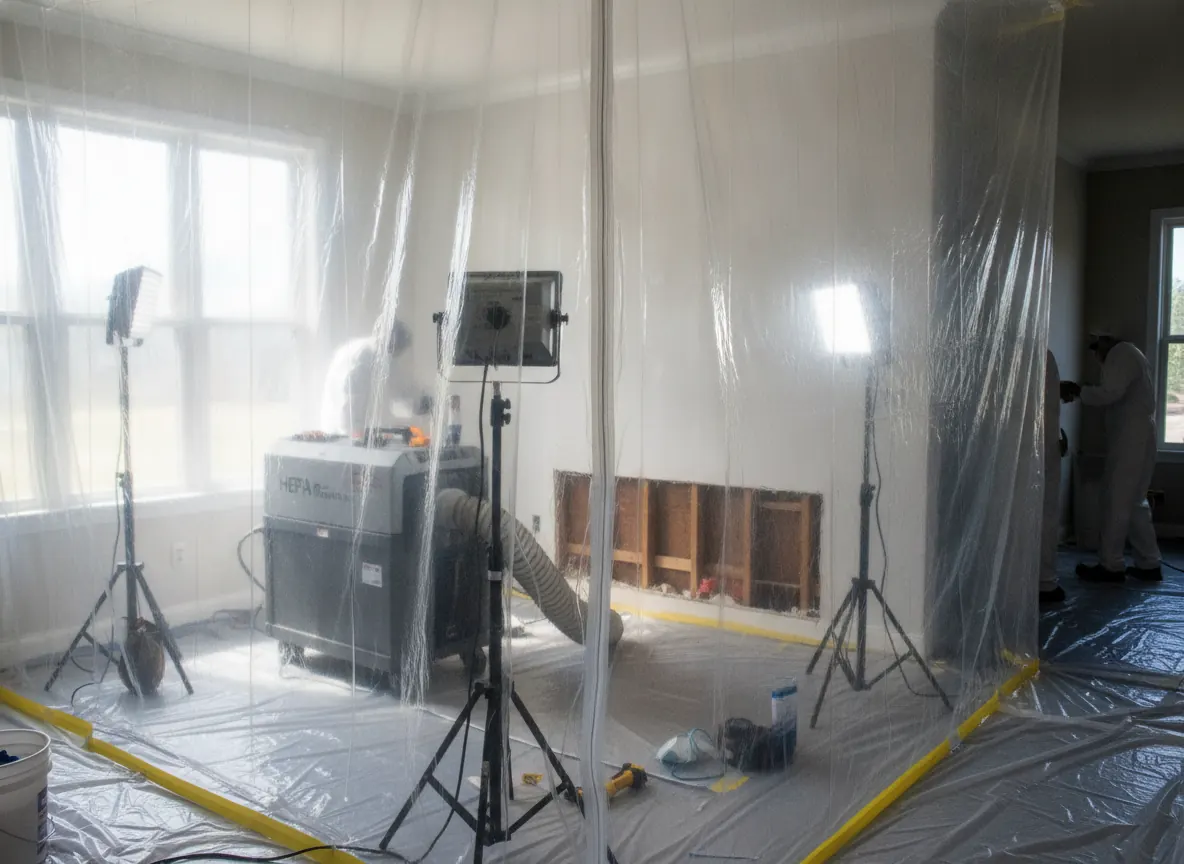
A mold quote is one thing. Finding out you might need to move out for part of it is another. For many homes in Durham, NC, you can stay put while the work is done, as long as the work area is closed off and you stay out of it. For some jobs and some households, leaving for a few days is the better call.
The short version. On small and medium jobs with proper containment, many families stay home and simply avoid the work area. Consider leaving when the work is in the main living space or your only bathroom, when the HVAC system will be off in hot weather, when large areas are being torn out, or when someone in the home has asthma, mold allergies or a weakened immune system. Ask the company and, for health questions, a doctor.
What containment does
Containment is what keeps the work area separate from the rest of the house. On a typical job it includes:
- Plastic sheeting walls, often with a zipper door
- Negative air pressure, using an air scrubber with a HEPA filter that exhausts air out of the work area
- Sealed supply vents and returns inside the work area
- Covered floors along the path the crew uses
- HEPA vacuuming and wiping before the plastic comes down
When containment is set up and kept up, the rest of the house stays usable. If you see plastic sagging, doors left open or dust outside the work area, say so right away.
When staying home usually works
- The work is in a room you can close off, such as a spare bedroom or a second bathroom
- The work is under the house or in the attic, with access from outside or through a hatch you can seal
- Your heating and cooling can keep running for the rest of the house
- Nobody in the home has asthma, mold allergies or a condition a doctor has flagged
- You can keep kids and pets away from the work area and the equipment
When leaving makes sense
- The work is in the kitchen, the main living area or the only bathroom
- Large sections of drywall, flooring or cabinets are coming out
- The ducts or air handler are being cleaned and the system will be off. RDU averages about 52 days a year at 90°F or hotter (NOAA 1991–2020), so a July shutdown is hard to live through
- Asbestos abatement is part of the job in an older home
- Someone in the household has a health condition that mold or dust may affect
- Crews will be in and out for several long days and noise is a problem for your work or sleep
On health, stick to what the agencies say. CDC: "For some people, mold can cause a stuffy nose, sore throat, coughing or wheezing, burning eyes, or skin rash. People with asthma or who are allergic to mold may have severe reactions." EPA: "Molds have the potential to cause health problems." This page is not medical advice. If you have a health concern, ask a doctor before the work starts.
Crawl space and attic jobs
Many Triangle jobs happen in the crawl space or attic, which helps. The crew may never need to walk through your living room. Two things still matter. First, air from a crawl space can move up into the house through gaps around pipes, wires and ducts, so ask how the company will keep work-area air from drifting up. Second, if ducts run through the crawl space or attic, ask whether the system should be off during the dustiest part of the work. See the crawl space mold page and attic mold for more on each.
How to prepare
| When | What to do |
|---|---|
| Before work day | Ask where containment goes, how long the HVAC will be off, and which rooms are off-limits. Move belongings out of the work area if the company asks you to. |
| Before work day | Plan for pets and kids. Decide if anyone should stay elsewhere. |
| During the job | Stay out of the containment. Keep doors to the work area closed. Report damaged plastic. |
| During the job | Ask for a daily update on what came out and what is next. |
| Before reoccupying | Ask what final check was done, and whether an independent clearance check is planned. |
NCDHHS guidance advises not hiring a consultant who also does the remediation. That is best practice, not a legal requirement in North Carolina, but an independent final check is a good reason to feel comfortable moving back in. The guide to clearance testing explains what it can and cannot show.
If you rent
In North Carolina, landlords must keep rentals fit and habitable (G.S. 42-42). Put repair requests in writing. If you may need to leave during the work, ask the landlord in writing who arranges and pays for it, because the statute does not spell that out. Tenants cannot withhold rent on their own without a court ruling (G.S. 42-44(c)). This is not legal advice. The rental mold page has more.
Hotel costs and insurance
Some homeowners policies include coverage for extra living costs when a covered loss makes a home unlivable, but mold coverage in North Carolina comes with limits and depends on the cause. Check your declarations page and ask your agent before you book a hotel. The guide to mold and homeowners insurance in North Carolina explains what the state research shows. For pricing, the Durham mold remediation cost guide lists published national ranges. North Carolina does not license mold inspection or remediation companies, so checking credentials is up to you.
Frequently asked questions
Can you stay in your home during mold remediation?
Often, yes, on small and medium jobs with proper containment and negative air. You stay out of the work area. Leaving makes more sense when the work is in the main living space, the HVAC system will be off in hot weather, or someone in the home has asthma or mold allergies.
Is it safe to sleep in the house during mold removal?
On many contained jobs, people sleep at home in rooms away from the work area. Ask the company where containment will be and whether the air system will run. If someone has a health condition, ask a doctor first.
Do I need to leave during crawl space mold remediation?
Usually not, since the work happens under the house. Ask how the company will keep air from the crawl space from moving up into the rooms above, and whether the HVAC should be off during the dustiest work.
Can pets stay home during mold remediation?
Pets can usually stay if they are kept well away from the work area, equipment and open doors. Some owners board pets for the noisiest or dustiest days.
Durham NC Mold Remediation is a free quote service, not a mold company. You describe the problem once, and independent mold inspection and remediation companies serving Durham, NC and the Triangle may reply with quotes. Companies may pay to receive requests, and they reply on their own schedules. Request free quotes or call (919) 386-4072.