
Who Pays for Mold Remediation? Tenants, Landlords and Sellers
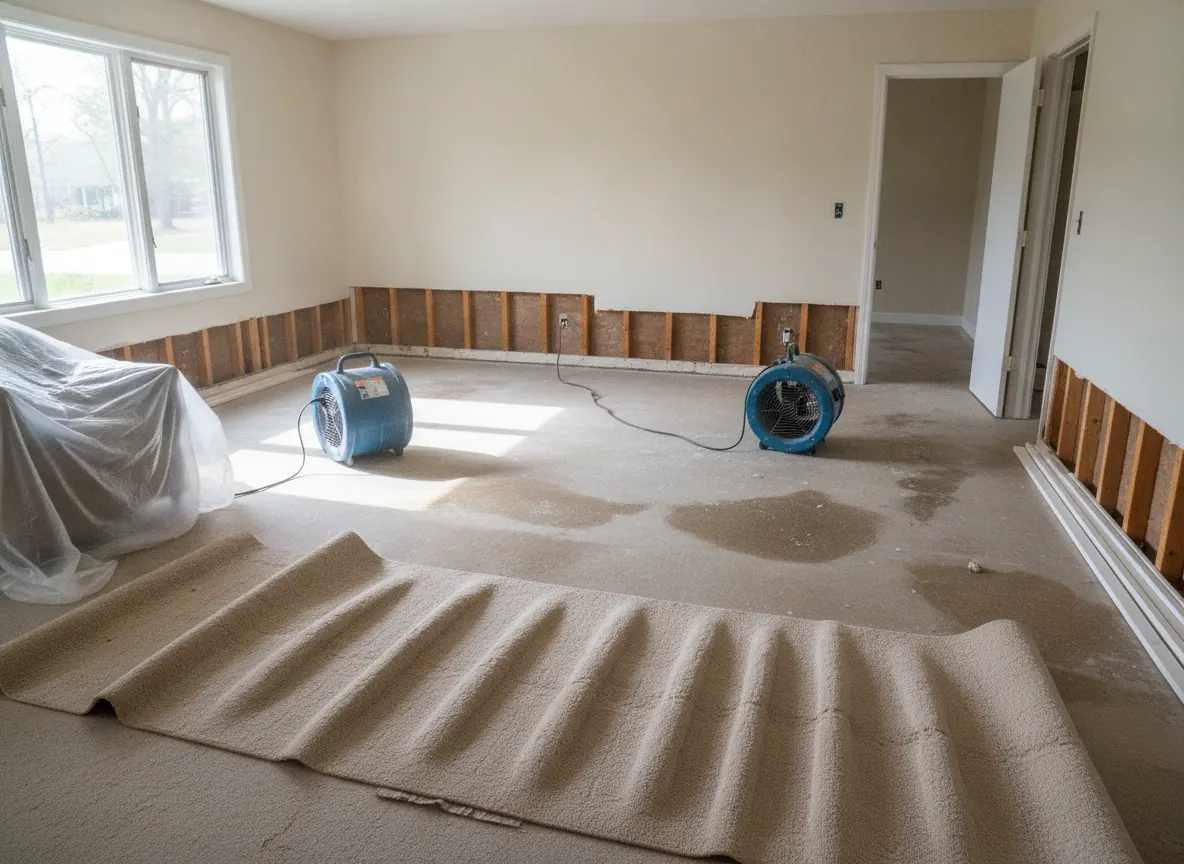
Mold rarely arrives with a bill attached. When you find it in a Durham, NC rental, in a house you are selling, or in a home you just bought, the next question is usually who should pay to fix it. In North Carolina the answer tends to turn on three things: who owns the property, what caused the moisture, and what your lease, contract or insurance policy says.
This guide walks through the common situations. It is general information, not legal or insurance advice. For a contract dispute or a denied claim, talk to a North Carolina attorney or your insurer.
The short version. In a rental, the landlord generally pays to keep the home fit and habitable, but may recover the cost of repairs that are the tenant's fault (G.S. 42-42). A homeowner pays unless insurance responds, and that depends on the cause and the policy's mold limits. In a sale, it is a negotiation between buyer and seller, usually settled before closing.
Who pays for mold remediation in a rental?
About 47.7% of occupied homes in Durham are rented (ACS 2020–24 5-year), so this question comes up a lot. North Carolina's landlord-tenant law, G.S. 42-42(a), says the landlord shall "make all repairs and do whatever is necessary to put and keep the premises in a fit and habitable condition."
The statute also lists "imminently dangerous" conditions a landlord must remedy within a reasonable time after notice. One item reads: "Excessive standing water, sewage, or flooding problems caused by plumbing leaks or inadequate drainage that contribute to mosquito infestation or mold." That is the only mold-specific wording our research found in North Carolina landlord-tenant law.
Two limits matter. First, the same subsection says the landlord "may recover from the tenant the actual and reasonable costs of repairs that are the fault of the tenant." Second, G.S. 42-44(c) says "the tenant may not unilaterally withhold rent prior to a judicial determination of a right to do so." Put repair requests in writing and keep paying rent while the issue is resolved.
Durham's code enforcement FAQ has said that mold itself is not a violation of the City's minimum housing code, and that inspectors look for causes such as roof or plumbing leaks. The City updated that code in June 2026, so check the current rules with the City before relying on either version. Our rental and tenant mold guide covers how to write the request and what to do next, step by step.
When might a tenant end up paying?
When the damage traces back to something the tenant did or failed to report, a landlord may seek the repair cost under the fault language above. Whether a particular case counts as tenant fault is a fact question, and the lease may add its own terms. Two habits protect you either way: report leaks in writing as soon as you see them, and take dated photos.
Renters insurance usually covers your belongings, not the building. The North Carolina Department of Insurance lists "accidental discharge or overflow of water or steam from within a plumbing, heating, air conditioning or automatic fire protective sprinkler system, or from within a household appliance" among the covered perils on renters forms. Read your own policy for how it treats mold.
Who pays when a homeowner finds mold?
If you own the home, you pay unless your insurance responds. North Carolina homeowners forms have carried a mold and fungus endorsement since 2002, which the NC Rate Bureau described as coverage "subject to certain limits." The same change removed "seepage and leakage" as a covered peril on the HO-3 form. Flood is excluded from homeowners policies and needs a separate flood policy, which usually has a 30-day waiting period (NCDOI).
In practice, the cause decides a lot. A sudden pipe burst is treated differently from a slow leak that went on for months. Check your declarations page for any mold limit, and call your insurer or NCDOI Consumer Services at 855-408-1212 with questions. Our post on whether homeowners insurance covers mold in North Carolina goes deeper, and the water damage and mold page covers the first days after a leak.
Who pays when mold turns up during a home sale?
In a sale, nobody is automatically on the hook. It becomes part of the deal. A few facts shape that negotiation:
- A home inspection is not a mold inspection. North Carolina's home-inspection standards say inspectors are not required to determine the presence of mold (11 NCAC 08 .1105(b)(7)). They do enter crawl spaces and report signs of abnormal water penetration or condensation, which is often where the mold question starts.
- Disclosure rules are worth a careful read. A scan of the Residential Property Disclosure Act (G.S. Chapter 47E) finds no use of the word "mold." That does not settle what a seller must disclose about leaks or water damage. Review the current disclosure form with your agent or attorney.
- Independent findings help both sides. A buyer can hire a separate mold assessor during the inspection window. See mold inspection and testing for when testing is worth it.
The usual outcomes are a seller-paid repair before closing, a price credit, or the buyer taking the home as-is and handling it after closing. If the seller does the work, ask for the written scope, invoices, the moisture fix and an independent clearance report. Our post on what clearance testing proves explains that last piece.
Condos and townhomes
In a condo or townhome community, the association's governing documents usually split responsibility between common elements and individual units. A leak from a shared roof or from the unit above can shift who pays. Read the declaration and bylaws, notify the association in writing, and ask your insurer how your unit policy coordinates with the master policy.
Who usually pays: a quick table
| Situation | Who usually pays first | What to check |
|---|---|---|
| Renter, leak or drainage problem | Landlord (G.S. 42-42) | Your written repair request and the lease |
| Renter, damage caused by the tenant | Landlord may recover actual, reasonable costs | Photos, lease terms, the cause |
| Homeowner, sudden plumbing failure | Homeowner, possibly with insurance help up to mold limits | Declarations page and endorsement |
| Homeowner, flood water | Flood policy if one was in force | NFIP policy and its waiting period |
| Home sale | Negotiated between buyer and seller | Contract, inspection report, disclosure form |
What the bill might look like
Published national estimates, not quotes: Fixr (Aug 2025) puts typical mold remediation at $1,500–$9,000, averaging about $3,500, and This Old House (Mar 2026) at $1,200–$3,750, averaging about $2,300. An independent inspection with testing often runs $450–$800 (Fixr, Jan 2025). The Durham mold remediation cost page has the full table and a planning calculator. Quotes come from independent companies, not this site.
Paperwork that helps whoever pays
- Dated photos of the mold and of the water source.
- Any written repair request, notice or claim number.
- A written scope from the company: what gets removed, cleaned and dried, and how.
- Proof the moisture source was fixed, such as a plumber's or roofer's invoice.
- A clearance report from someone independent of the remediation company.
Clear records shorten arguments with landlords, insurers and buyers alike. They also show the next owner what was done.
Frequently asked questions
Is my landlord responsible for mold in North Carolina?
Generally, landlords must keep rentals fit and habitable under G.S. 42-42, and the statute lists standing water or plumbing leaks that contribute to mold as an imminently dangerous condition. Send a written request. A landlord may recover costs for repairs that are the tenant's fault. This is not legal advice.
Can I stop paying rent until the landlord fixes mold?
Not on your own. G.S. 42-44(c) says a tenant may not unilaterally withhold rent before a court rules there is a right to do so. Keep paying, put your requests in writing, and talk to a North Carolina attorney or legal aid office about your options.
Does homeowners insurance pay for mold remediation in NC?
Sometimes. North Carolina forms carry a mold and fungus endorsement with limits, and whether a claim is paid usually depends on the cause, such as a sudden pipe burst versus a slow leak. Flood is excluded. Check your declarations page or call NCDOI at 855-408-1212.
Does the seller have to pay for mold found during a home inspection?
Not automatically. In North Carolina it is usually negotiated: the seller repairs before closing, gives a credit, or the buyer accepts the home as-is. Ask for written scopes, invoices and an independent clearance report if the seller handles the work.
Durham NC Mold Remediation is a free quote service, not a mold company. You describe the problem once, and independent mold inspection and remediation companies serving Durham, NC and the Triangle may reply with quotes. Companies may pay to receive requests or calls, and they reply on their own schedules. Request free quotes or call (919) 386-4072.