
Mold in New Construction: Triangle New-Build Homes
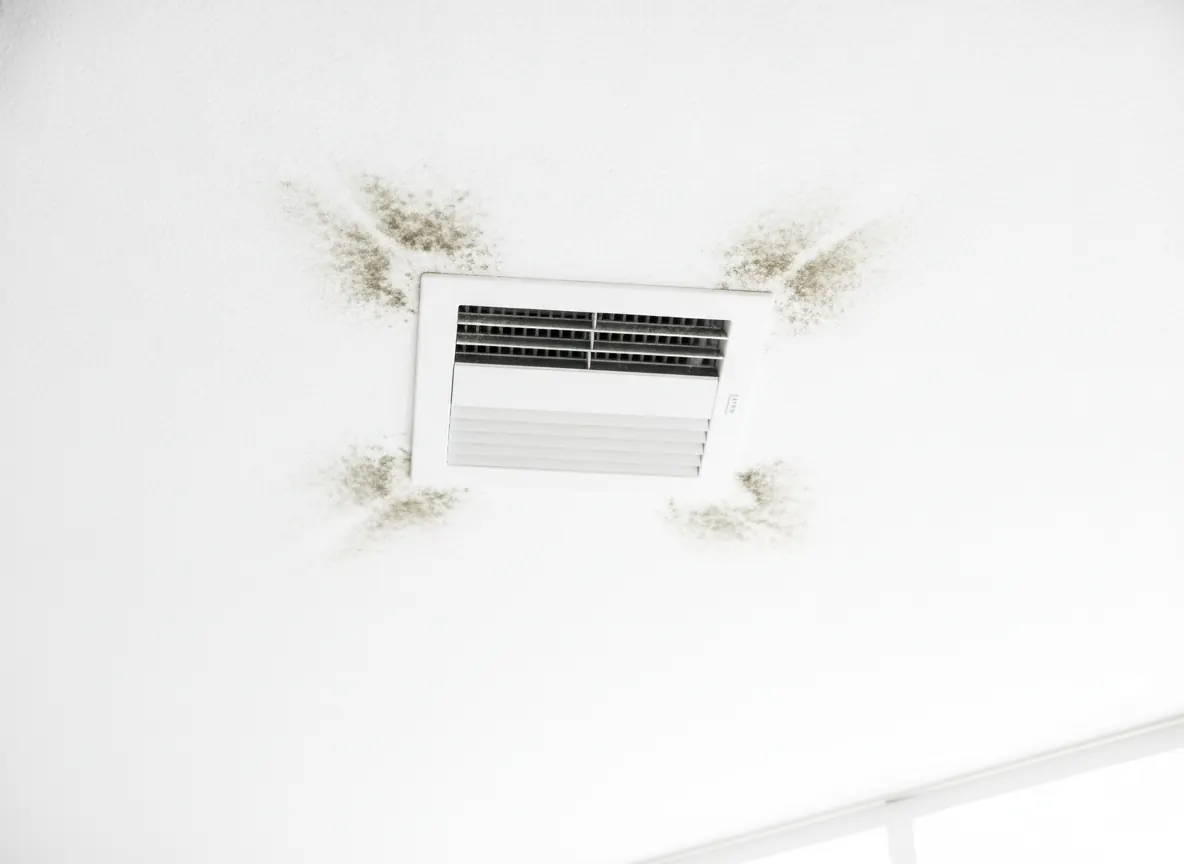
A new house can grow mold. It surprises people, because mold feels like an old-house problem. But a new home is built from wood, drywall and concrete that took on water during construction, and it is often sealed tighter than older homes. In a humid place like the Triangle, that mix can show up as mold on framing, around vents or in the attic within the first few years.
This matters around Durham, NC, where much of the housing is recent. Among homes in the cities below, the share built in 2010 or later is high (ACS 2020–24 5-year):
| Place | Homes built 2010 or later |
|---|---|
| Wake Forest | 46.0% |
| Apex | 45.5% |
| Holly Springs | 44.1% (margin of error applies) |
| Morrisville | 36.8% |
| Durham | 25.3% |
The short version. New-home mold usually comes from moisture, not age: framing that was wet when it was enclosed, humid summer air, HVAC that cools without drying, bath and dryer vents that end in the attic, or a plumbing leak. Find and fix the moisture first. Report it to your builder in writing if you are inside a warranty period.
Why do new homes get mold?
Every building gets wet while it is being built. Lumber sits in the rain, concrete gives off water as it cures, and drywall goes up during a humid summer. If framing is closed in before it dries, mold can start inside the walls. Our research did not find Triangle-specific data on how often this happens, so treat it as a known risk rather than a forecast.
Weather adds to it. Raleigh-Durham averages about 46 inches of rain a year, about 52 days a year at 90°F or hotter, and summer dew points in the mid-60s (NOAA 1991–2020, RDU). Humid air finds cool surfaces: supply ducts, the back of a closet on an outside wall, the underside of roof decking.
Then there is the air conditioning. NCDHHS guidance notes that an oversized or undersized AC unit "can create high humidity by cooling without removing water vapor." A large system in a small, tight house may cool quickly and shut off before it pulls much water out of the air.
Where to look in a newer Triangle home
- Around supply vents. Spots on ceiling registers or the drywall next to them often point to condensation. See HVAC and duct mold.
- The attic. Look at roof decking near bath fan and dryer ducts. A duct that ends in the attic instead of outside dumps warm, wet air right where it causes trouble. See attic mold.
- The crawl space, if there is one. Most new South Atlantic homes are built on slabs (85.7% of 2024 single-family starts, NAHB), but some Triangle homes still sit on crawl spaces. Check joists, insulation and the vapor barrier. See crawl space mold.
- Behind and under fixtures. Sinks, dishwashers, refrigerator lines and the water heater. Small fitting leaks are common in the first year.
- Closets and corners on outside walls. Low air movement plus cool surfaces equals condensation.
- Windows and doors. Stains at the corners can mean water getting past the flashing.
Crawl spaces and humidity
For homes with crawl spaces, research words it this way: an Advanced Energy and US Department of Energy field study in eastern North Carolina found that wall-vented crawl spaces were "often above 80% relative humidity" in summer, while closed crawl spaces stayed "generally below 60%." The vented ones showed "microclimate conditions that supported mold growth and moisture deterioration." A follow-up specification called for full ground coverage with a "minimum 8 mil thick, fiberglass-reinforced polyethylene vapor retarder."
That does not mean every vented crawl space has mold, or that your builder did it wrong. It means humidity control under the house is worth checking early. Our post on whether encapsulation is a mold fix explains where moisture control ends and mold cleanup begins.
What to do if you find mold in a new home
Document it
Take dated photos of the mold, any staining, and any visible water source.
Find the moisture
Leak, condensation, vent problem or humidity? The fix depends on the cause. A dehumidifier or a hygrometer reading helps: NCDHHS says mold will "almost certainly grow" if indoor relative humidity stays above 70% for extended periods, and EPA advises keeping it below 60%, ideally 30–50%.
Notify the builder in writing
If you are inside a builder warranty period, send a written notice with photos and keep a copy. Warranty terms vary by builder, so read yours for deadlines and exclusions.
Get an independent look
An independent assessor can describe the extent and the likely cause without a stake in the repair. That record helps whether the builder or you end up paying.
Fix, clean, verify
Correct the moisture source, remediate the affected materials, and confirm the result. See what clearance testing proves.
Doesn't the new-home inspection cover mold?
Not usually. North Carolina's home-inspection standards say inspectors are not required to determine the presence of mold (11 NCAC 08 .1105(b)(7)). An inspector will enter the crawl space and report signs of abnormal water penetration or condensation, which is useful, but a home inspection is not a mold inspection. If you want a mold check before the builder warranty period ends, ask for it as a separate service. See mold inspection and testing.
Builder, homeowner or insurer: who pays?
If the cause is a construction defect reported inside the warranty window, the builder may be responsible under the warranty's terms. If it is a sudden plumbing failure, your homeowners policy may respond, subject to its mold limits. If it comes from how the house is run, such as a humidifier or blocked vents, it usually falls to the owner. Our guide on who pays for mold remediation covers the general rules.
Preventing it in the first years
- Run bath fans during and for a while after showers, and confirm they vent outdoors.
- Check that the dryer vent ends outside, not in the attic or crawl space.
- Watch indoor humidity in summer. If it stays high, ask an HVAC contractor whether the system is sized and set up to dehumidify.
- Change HVAC filters and keep the condensate line clear.
- Walk the attic and crawl space once a year, or have someone do it.
For a sense of costs, see the Durham mold remediation cost page. Published national ranges put typical remediation at $1,200–$3,750 (This Old House, Mar 2026) to $1,500–$9,000 (Fixr, Aug 2025). These are estimates, not quotes.
Frequently asked questions
Is it normal to find mold in a new house?
It is not rare. New homes are built with materials that got wet during construction, and tight houses in humid climates can trap moisture. Mold in a new house usually points to a moisture problem such as a leak, condensation or a vent that ends in the attic.
Is the builder responsible for mold in a new home?
Sometimes. If the cause is a construction defect and you report it in writing inside the warranty period, the builder may be responsible under the warranty's terms. Warranty language varies, so read yours and document the problem with dated photos and an independent assessment.
Why is there mold around the AC vents in my new home?
Usually condensation. Cool supply air meets humid indoor air, and moisture forms on the vent or nearby drywall. An HVAC system that is oversized or not set up to dehumidify can make it worse. Have the system checked, then clean or remediate the affected area.
Will a home inspection find mold in new construction?
Not reliably. North Carolina's home-inspection standards do not require inspectors to determine whether mold is present. They do report signs of abnormal water penetration and condensation. If you want a mold check, ask for it as a separate service.
Durham NC Mold Remediation is a free quote service, not a mold company. You describe the problem once, and independent mold inspection and remediation companies serving Durham, NC and the Triangle may reply with quotes. Companies may pay to receive requests or calls, and they reply on their own schedules. Request free quotes or call (919) 386-4072.